
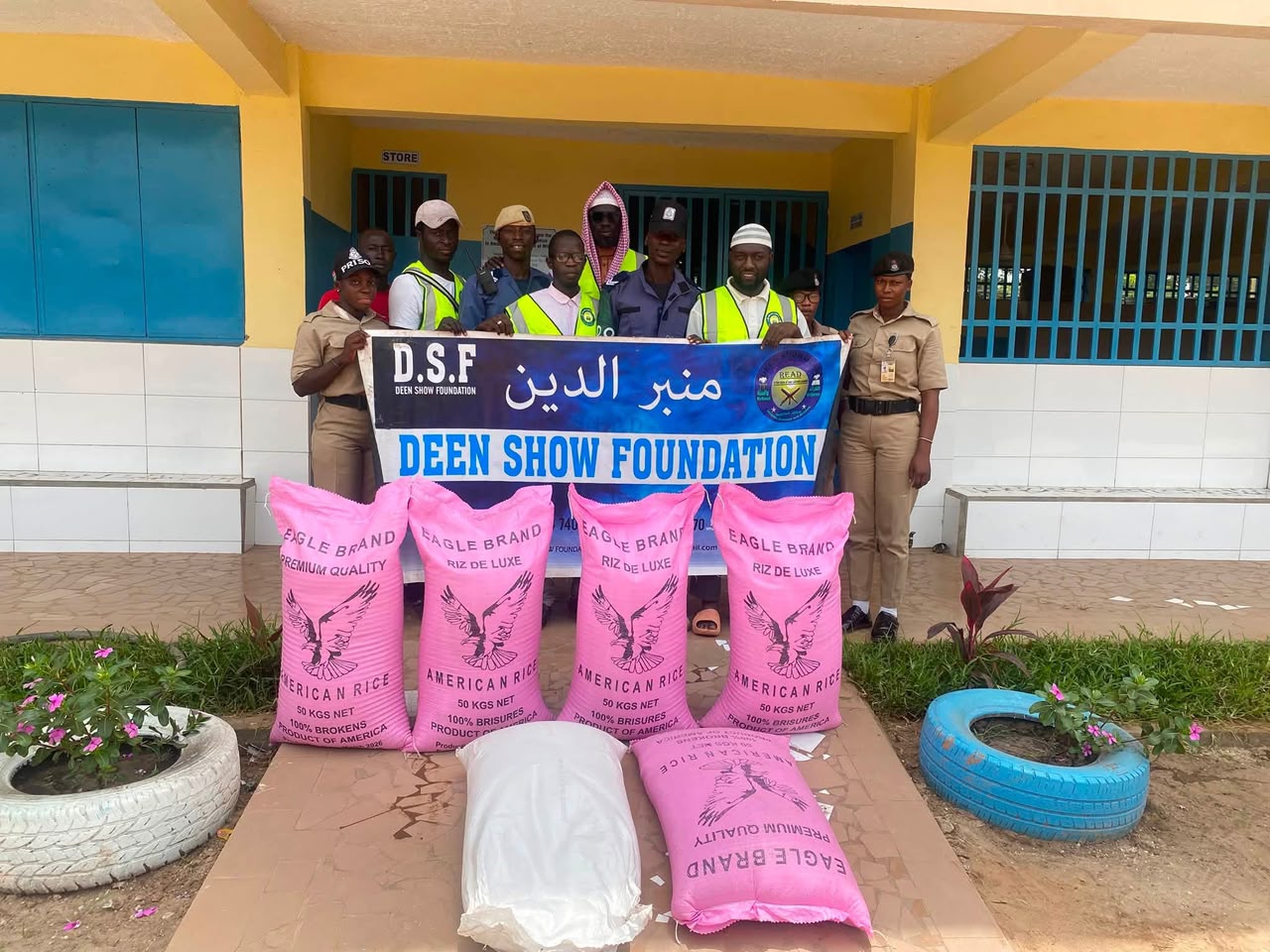
On the 4th of July 2026, the Deen Show Foundation visited the Mile 2 Central Prison in Banjul.
This visit served as another powerful reminder that true humanitarian service extends far beyond providing food and financial assistance. At its core, it is about remembering those who are often forgotten, showing genuine compassion, and restoring hope to individuals no matter where they may be.
In Islam, caring for and feeding prisoners is not merely an act of goodwill or charity—it is a mandatory duty deeply rooted in divine revelation and the explicit Sunnah of Prophet Muhammad (ﷺ). Centuries before modern international conventions established human rights, Islam codified the dignified treatment of captives, placing a high priority on their fundamental need for sustenance.
1. The Quranic Mandate
The Quran highlights the selflessness of feeding those in need, explicitly including captives:
“And they give food out of love for Him to the needy, the orphan, and the captive, [saying], ‘We feed you only for the countenance of Allah. We wish not from you reward or gratitude.'” — Surah Al-Insan (76:8–9)
2. The Prophet’s Instruction and Practical Example
The tradition of compassion toward captives is also central to the Prophet’s teachings. Prior to the Battle of Badr, Prophet Muhammad (ﷺ) explicitly instructed his companions:
“I enjoin you to treat the captives well.” — Tabarani
Through initiatives like this visit, the Deen Show Foundation continues to uphold these timeless principles of dignity, mercy, and service.